
What this service involves
Verify wiring is inactive, disconnect it safely and remove accessible abandoned sections.
Typical scope and limits: Typical half-day scope. Concealed demolition and hazardous-material work excluded.
Who usually needs it
Owners of older homes with knob-and-tube, ungrounded or deteriorated wiring, or with insurance or inspection findings to address.
Estimated pricing
$360–$1,080 per small project
Priced per small project. This is a planning range, not a quote.
Project ranges include labor and standard installation materials unless a listing says otherwise. Hourly rates are labor only, and equipment you supply (such as chargers, fixtures or fans) is not included. Permit fees and sales tax are additional. Estimates are free, including on-site visits.
Electrical work may require openings in walls or ceilings. Drywall patching, texture, and painting are not included and must be arranged with others.
What an electrician evaluates first
- Which circuits are original, altered or already updated
- Attic, crawlspace and wall access
- Plaster versus drywall finishes
- Panel capacity for the new circuits
- Which rooms can be phased while the home is occupied
Typical work sequence
- Survey existing circuits and access
- Agree on scope and phasing
- Run new circuits and boxes
- Connect and retire old circuits
- Rough and final inspections
- Others handle wall patching and paint
Access and disruption
Rewiring usually requires small openings in walls and ceilings. Drywall or plaster repair and painting are not included and must be arranged with others.
Permits and inspection
New circuits, equipment changes and most wiring alterations normally need an electrical permit and inspection. In Washington, Labor & Industries issues electrical permits except in cities that run their own electrical program, so the permitting authority depends on the property address rather than the mailing city. True confirms the correct authority before work starts. Permit fees are additional to the estimate.
Helpful, safe photos
Visible wiring in an unfinished attic or basement taken from a safe position, outlet types in each room, and the closed panel. Only photograph what is safely visible — never remove electrical covers.
Related True Wire work
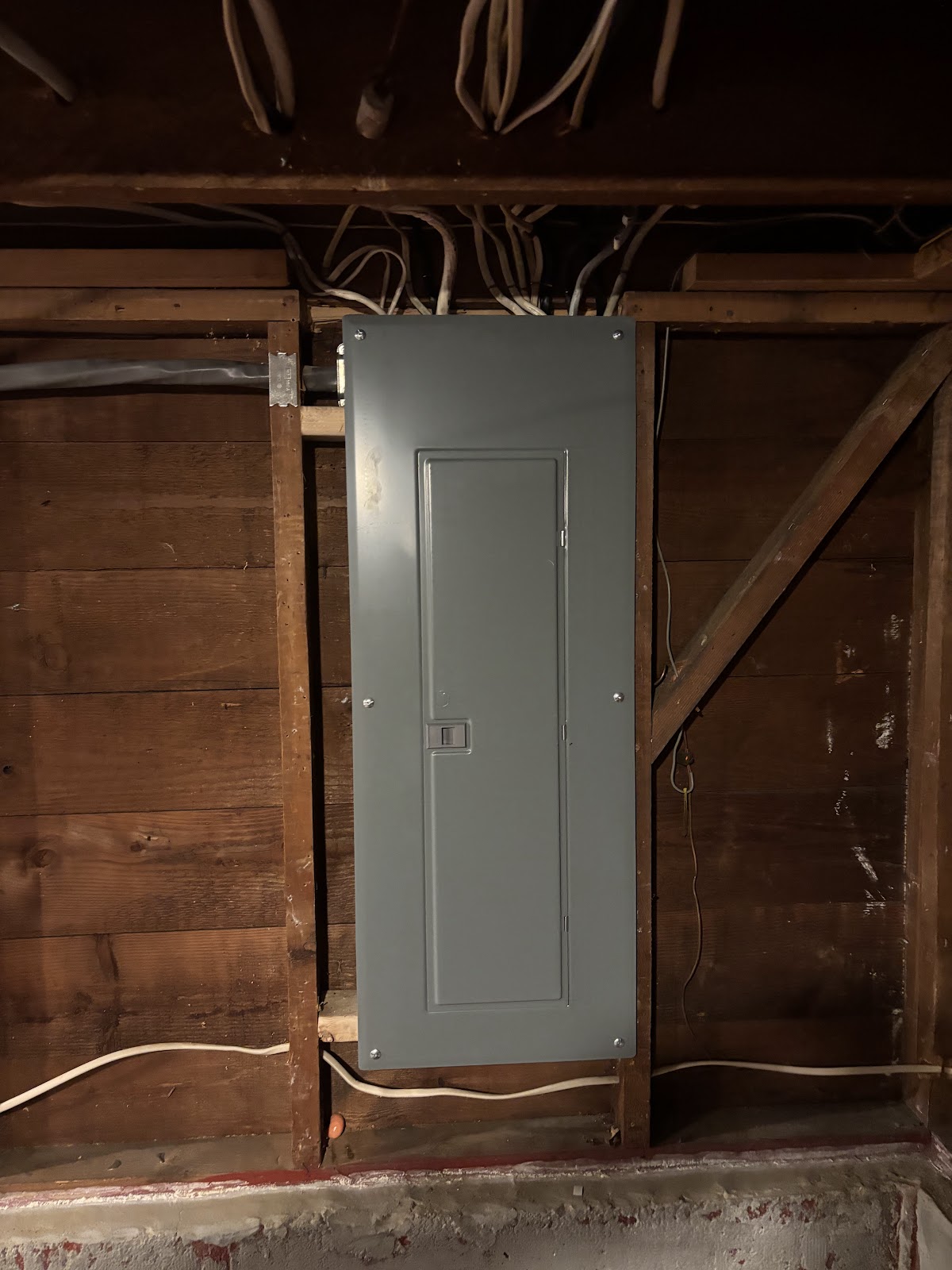
Photos from related projects; they are not necessarily this exact service.
Questions
Does older wiring always need to be replaced?
Not automatically. The condition, alterations and how the circuits are used determine the recommendation. An existing installation is not required to meet every current new-construction rule unless work triggers it.
Can rewiring be done in phases?
Often. Phasing can keep parts of the home usable, but each phase still needs access and planned outages.
Not sure what you need?
Send a photo. Ask a certified electrician.
Not sure what you need? Send a photo and tell True what’s going on or what you’d like to change. Get help understanding your options and the next step.
Tell True about your project
What happens next
Tell us what you’re working on. True will review your request and respond by your preferred contact method. Together, we’ll determine whether the next step is advice based on your photos, a visit, or an estimate. Estimates are free, including on-site visits.